

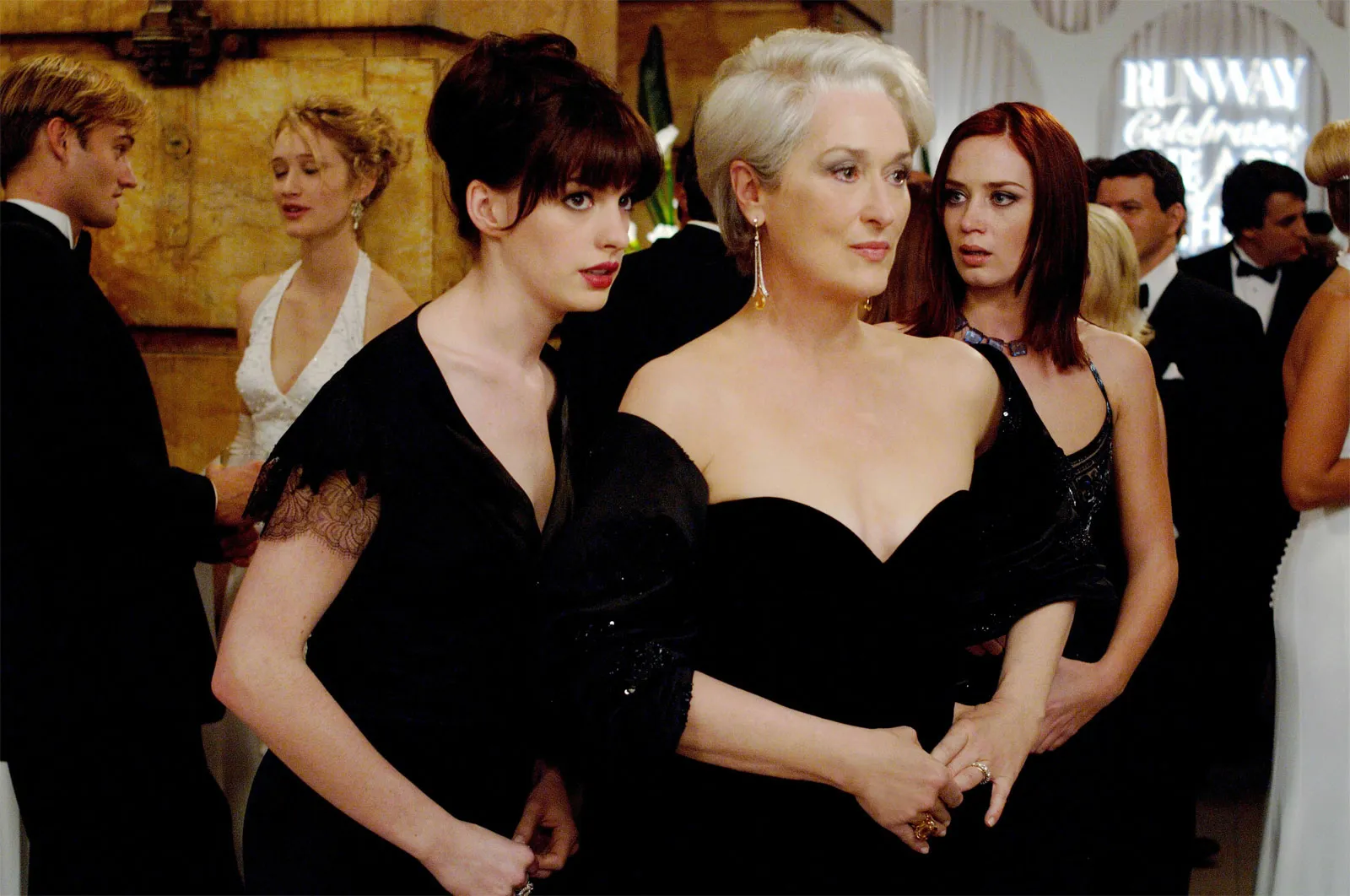
Behind the fashion, styling and feistiness lies a story of survival at work.

The Devil Wears Prada is really a movie about work; how we show up for work physically, emotionally and psychologically. It is about ambition, power, hierarchy and survival within high-pressure professional spaces. It is also a story about workplace behaviour. About loyalty and dedication being overlooked. About how people are rewarded for performance while simultaneously being emotionally diminished.
Twenty years ago many of us watched Miranda Priestly and laughed. The handbag throwing. The impossible demands. The icy silence. The cutting comments. We called it genius. We called it excellence. We called it leadership. Re-watching the first film was a rite of passage before going to see the current one. And watching a twenty-year old film in 2026, hits differently now that ‘toxic workplace’ is a phrase everyone knows, and most people have lived.
We have witnessed a mainstream cultural shift where people are openly naming and rejecting workplace cultures that were previously accepted as “just how it works.” Audiences now have a vocabulary for what Miranda was doing that they didn’t really have in 2006. Which is perhaps why the sequel, arriving twenty years later, makes a point of showing us something small but significant. Miranda Priestly hangs up her own jacket. No assistant rushes forward to receive it. No one waits in fearful anticipation at the door. It is a quiet moment that you could miss but this simple gesture holds a whole conversation. The culture has shifted, or at least Miranda has learned to read the room.
Subtle control has replaced open intimidation. The power is still there. It has simply become more careful about how it shows itself.
The 1996 Miranda Priestly may be one of the clearest examples of what Kim Scott in Radical Candor describes as “Obnoxious Aggression”, where the culture is challenging directly while failing to care personally. Scott explains that obnoxious aggression is often disguised as brutal honesty. The work gets done, but people are harmed in the process.
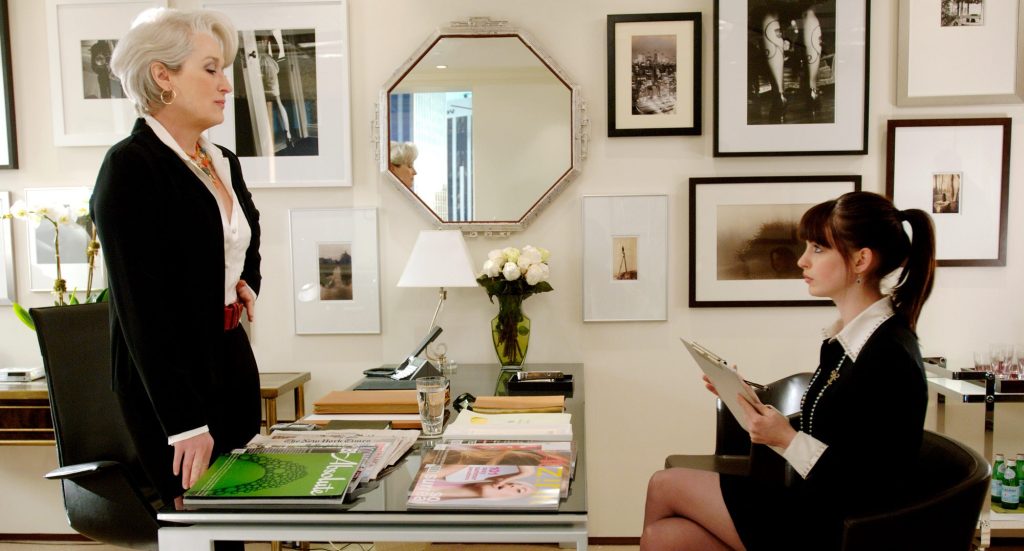
Miranda does not merely demand excellence. She uses intimidation as her weapon. She normalises emotional fear as a management strategy. Throwing her coat and handbag at assistants became symbolic of a workplace culture where status grants permission to dehumanise others.
The uncomfortable truth is, audiences admired her for it. Perhaps we do so unwittingly as we have been trained by movies, by corporate culture, by stories told about difficult geniuses who built great things to believe that genius earns the right to be unkind. That high standards and high pressure are inseparable.
Scott contrasts obnoxious aggression with three other workplace behaviours, and each of them also lives somewhere in that Runway office.
“Manipulative Insincerity” is praise to someone’s face and criticism behind their back, the passive aggressive politics that many workplaces quietly reward. Emily, Andy’s senior colleague, performs cheerfulness around Miranda while privately competing, undermining and managing her own fear through control of whoever sits beside her.
“Ruinous Empathy” is avoiding difficult truths to spare feelings, even when honesty would help growth. Nigel, the art director, the mentor, the only person in the building who speaks plainly to Andy comes closest to something genuine. But even his candour has limits. He has survived Runway by learning when to speak and, more importantly, when not to.
“Radical Candor” is different. It insists that people can challenge authority directly while also caring personally. It argues that leadership should not require humiliation. It is, notably, almost entirely absent from the film. Which is perhaps the point.
That is where The Devil Wears Prada becomes more than a fashion film. It becomes a media text about emotional labour. About the cost of proximity to power and the normalisation of impossible standards. About how young workers, especially women, entering perceived high-level jobs are taught that suffering is the price of entry.
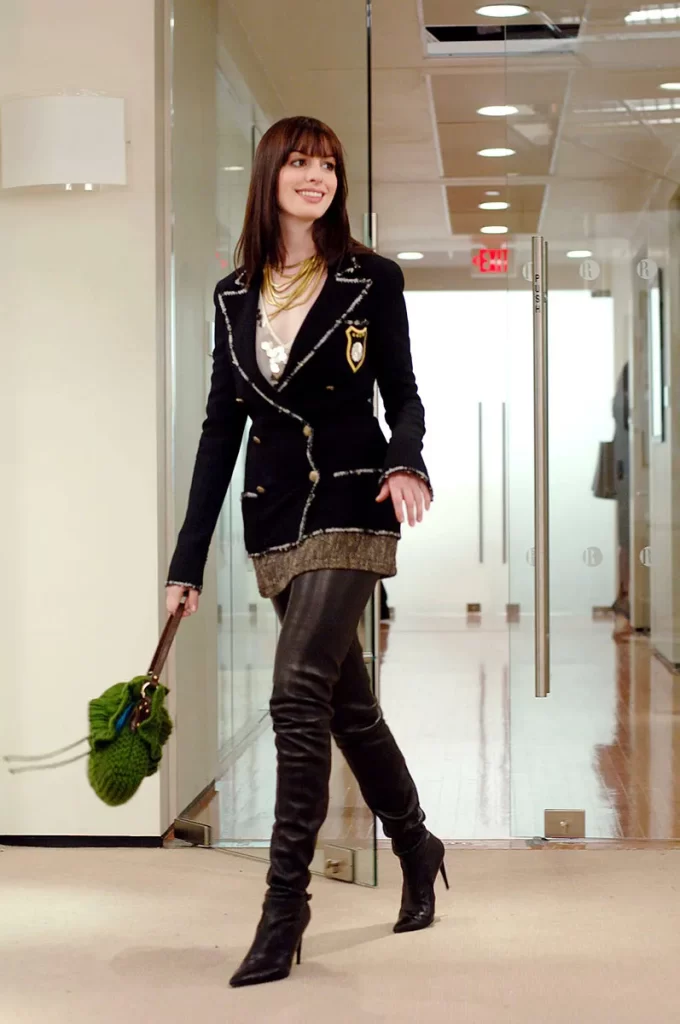
The 1996 Andy arrives as herself – curious, smart, underdressed, a little too confident that talent would be enough. To survive, she learns the codes, adopts the aesthetic. She begins to disappear into the role, and we fall so in love with the fashion that we celebrate the transformation until Andy decides to stop.
Her transformation was never just about the clothes. It was about how much of yourself you are willing to surrender in exchange for a seat at the table. The film allows us to choose.
Miranda’s choice is to surrender to that world. In Part 2, her conversation with Andy in Paris suggests that she may have surrendered more than she bargained for. The conversation demonstrates a quiet acknowledgement that survival at that level requires a particular kind of sacrifice, one not everyone on the other side of it is glad they paid.
This is perhaps the reason why The Devil Wears Prada has outlasted its cultural moment. It is more than fashion and Meryl Streep’s performance, (though we must admit her performance is perhaps the most precisely controlled portrayals of power ever put on screen). It is not about Anne Hathaway’s cute portrayal of a drowning journalist – It is the recognition that work is a major part of our lives, and our workplace culture matters.
Most people have worked somewhere that asked too much. Most people have had a manager who made them feel small in the name of standards. Most people have, at some point, looked at themselves in a mirror and wondered how far they are willing to go and who they are willing to become to get to where they want to be.
The Devil Wears Prada asked that question twenty years ago and dressed it in fashion. The Devil Wears Prada 2 shakes it up and provides us with the answer – toxic workplace cultures are unhealthy and unacceptable.

Coleen Douglas
Coleen Douglas is a Lecturer in Integrated Marketing Communication at the University of Technology (UTECH), Kingston, Jamaica. She has over twenty-five years in media and event production and is actively involved in the Jamaican music industry and Rastafari community.
 Tami Tsansai
  WK Admin