

Jamaica’s Indigenous Peoples Enter Ocean Governance Conversation
Editor’s Note:
The participation of Jamaica’s Indigenous communities in conversations about ocean governance, cultural heritage, and climate resilience, has finally come after years of preparation. This new development represents the continuation of a call that those who have spent centuries caring for our lands and waters must have a voice in the decisions shaping their future.
Writes and Kulcha has been documenting this conversation for the last two years.
In our award-winning 2024 feature, “No Climate Resilience Plan Without Us, Say Jamaica’s Indigenous Peoples,” we explored the importance of including Indigenous knowledge systems in climate decision-making. In “After Melissa”, we lamented what happens when we don’t. Through our “Wakia Yaka” presentation at this year’s Charles Town Maroon Conference and Festival, we continued examining the need for institutional acknowledgement, respectful inclusion, and expanded representation for Jamaica’s Indigenous Peoples. The 31st International Seabed Authority Assembly in Kingston, Jamaica, offers another significant chapter in this journey.
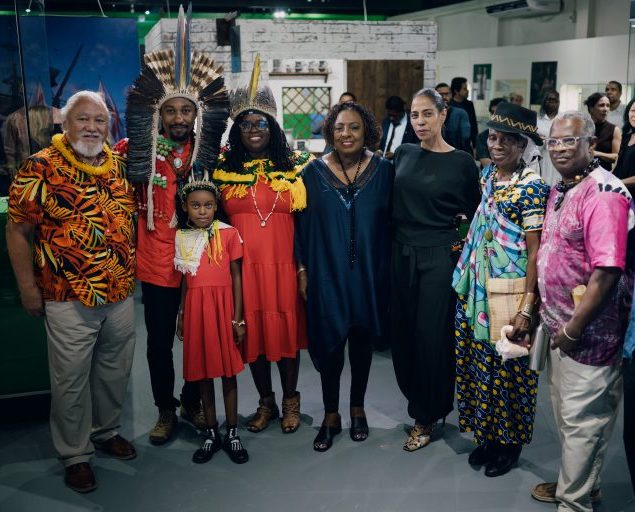
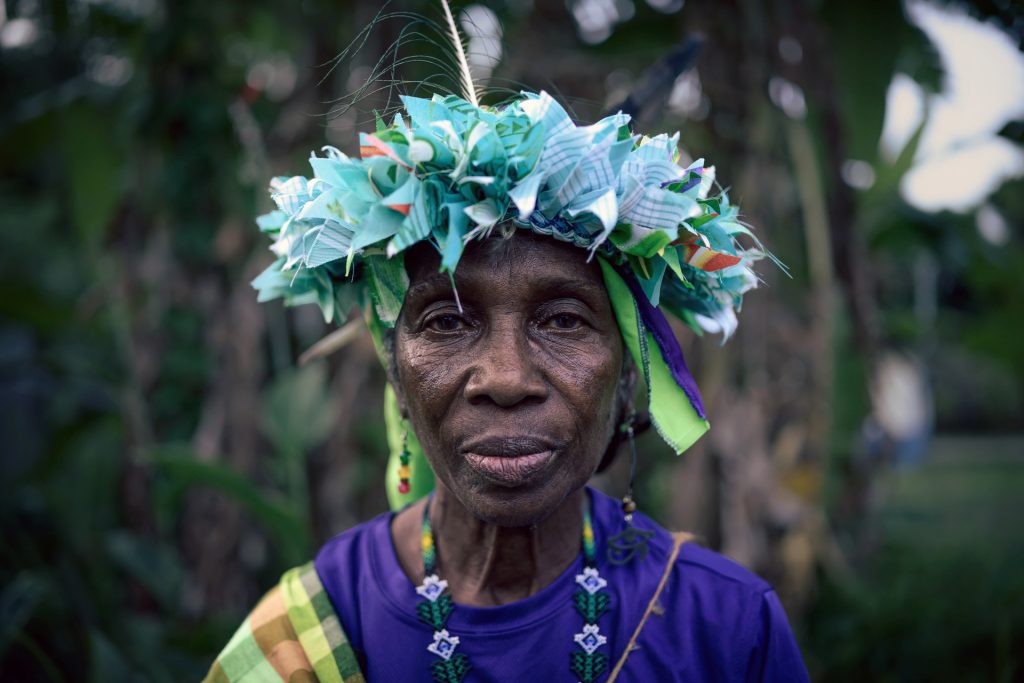
As the official media partner of the Yamaye Guani Taino Peoples, we bring you a detailed account of the participation of Jamaica’s Indigenous leaders alongside international Indigenous representatives, conservationists, and ocean governance stakeholders. It uses information shared by Kasike/Behike Kalaan Nibonrix Kaiman, Chief of the Yamaye Guani Taino Peoples, who was joined by Gaa Mang/Gaama Gloria “Mama G” Simms, representing the Maroon Indigenous Women’s Council, at the invitation of TBA21 (Thyssen-Bornemisza Art Contemporary).
Language carries memory, too. This article features words and phrases from Jamaican Patois, the island’s primary language, and Wahiyani or Island Arawakan, alongside smaller contributions from Twi and Hawaiian.
The call of the Hawaiian conch shell and Yamayeka guamo recently echoed together alongside the Maroons’ abeng to signal a new moment in Jamaica’s Indigenous advocacy. For several years, the island’s Indigenous communities have called for meaningful participation in decisions affecting their lands, waters and cultural heritage. On July 30, that call reached the 31st Session of the International Seabed Authority (ISA) Assembly.
TBA21’s website shared this about the event:
The 31st International Seabed Authority (ISA) session is a turning point for global ocean governance. The primary stakes are whether nations can finalize the Mining Code to regulate deep-sea mining, or if the deep ocean will be opened to commercial exploitation before strict environmental protections are in place.
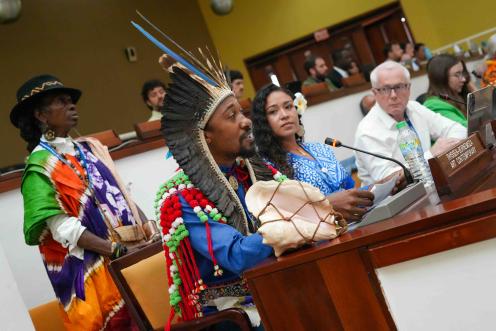
Kasike Kalaan, in his historic address to the ISA alongside Gaama Mama G, asked for a moratorium on behalf of Jamaica’s Indigenous Peoples, saying:
“We come as caretakers of an ocean that sustains all life… Our elders teach us that the earth does not belong to us—we belong to the earth… As a collective, we hold sacred everything from the mountain rivers to the ocean deeps…In Jamaica, our communities are fenced off from beaches where we go to give offerings. Deep-sea mining risks repeating this tragedy globally… True progress means making decisions today that safeguard living seas for generations to come.”
kalaan nibonrix kaiman, kasike/behike – yamaye guani taino peoples
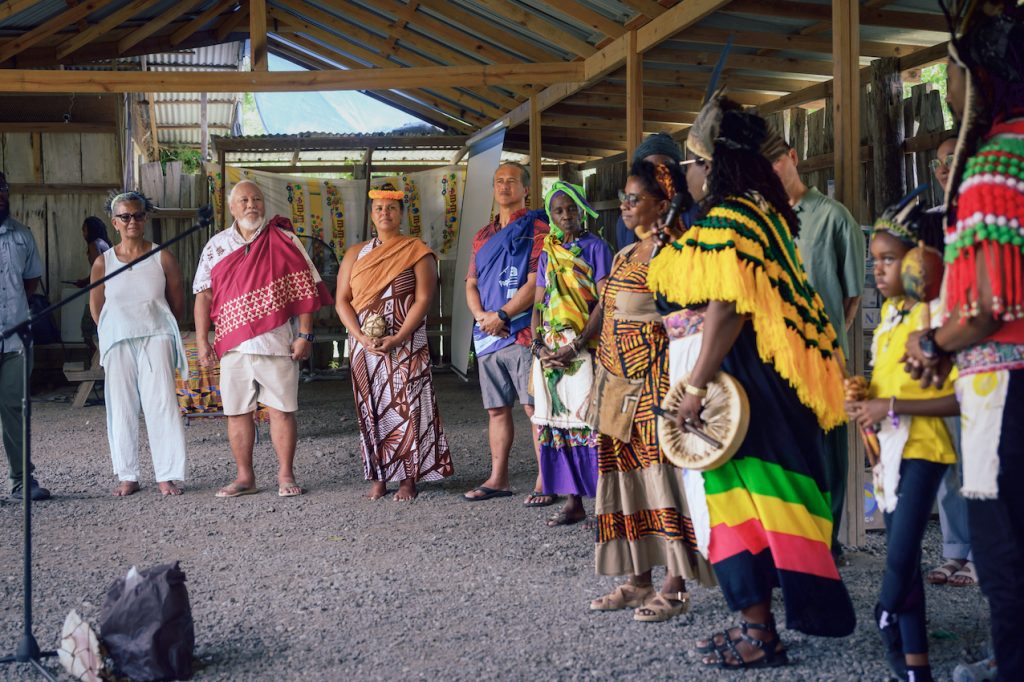
Photo: Fernando Hevia
Before the ISA
The road to Kingston’s Assembly floor began, in this instance, with a Pacific-Caribbean Indigenous exchange in Charles Town, Portland, on July 19. There, delegates and cultural groups from the Yamaye Guani, Charles Town, Moore Town, Scott’s Hall and Accompong Maroon communities met with representatives of the Kanaka ʻOiwi, the Indigenous Peoples of Hawaiʻi. The ceremonial exchange created space for cultural learning and relationship-building before the formal ISA proceedings.
At this gathering, the Yamaye Guani opened the ceremony with a tobacco cleansing and a call to the four sacred directions. The Hawai’ian delegation shared sacred chants, or oli, and stories about their relationship with the Pacific Ocean and the life systems connected to it. Then came the gift-giving segment, in which eight-year-old Kasike-Rahuto⁹ Tanama-Areyto presented her artwork, a depiction of a green sea turtle in blue water, to Dr Brittany Lehua Kamai from the Hawai’an delegation. Her reasoning was simple.
“We all have to protect the sea, and if we don’t start, we won’t have a world to live on.”
tanama-areyto, kasike-rahuto – yamaye guani taino peoples
The water ceremony—central to the proceedings— followed, with participants sharing fresh water gathered from rivers, lakes and streams across Hawaiʻi and carried to Jamaica, alongside water from the Pacific and Atlantic Oceans. These waters were then given to Gaama, who poured them together to be introduced to the Charles Town River as a symbol of synergy.
As participants gathered around a yabba, or clay pot, they spoke their intentions into the collected waters. Mama G then led the procession to the river, where offerings were made to Mami Wata and the blessed water was returned to the river on its journey towards the Caribbean Sea.
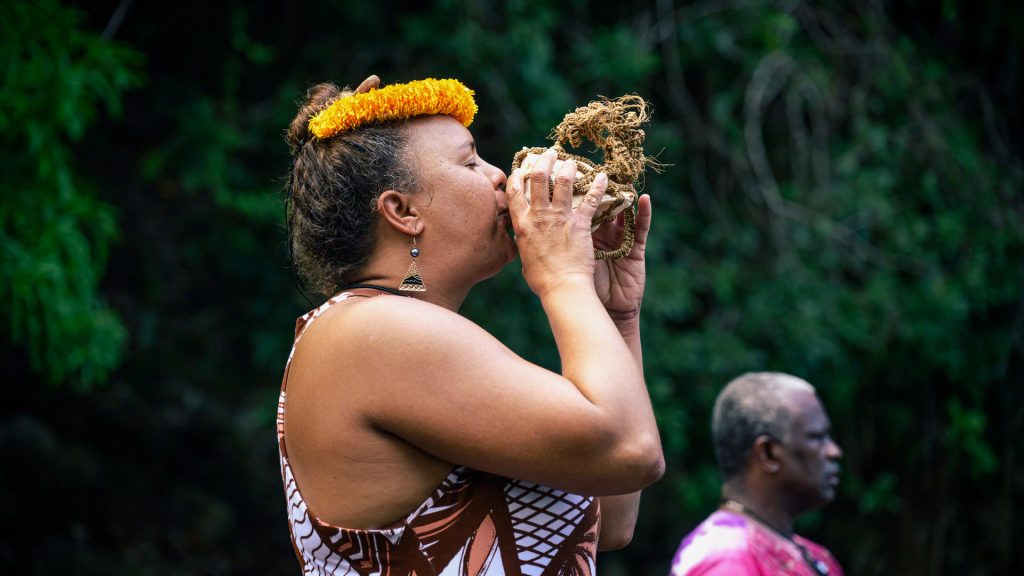
Photo: Fernando Hevia
That action also established what organisers described as a Sacred Ocean Alliance, connecting Indigenous communities across the Pacific and Atlantic oceans around a shared commitment to ocean stewardship.
The exchange ended with another act of renewal: a young breadfruit tree was planted to replace a community tree destroyed by Hurricane Melissa. Known as ʻulu in Hawaiʻi, breadfruit carries its own Pacific-Caribbean history. The new tree connected the exchange to the land as well as the sea, while its planting offered a tangible response to loss as the Indigenous delegations blessed the young tree and poured some of the gathered water over it.
The ceremony carried a familiar message to anyone who has followed Jamaica’s climate justice conversation: relationships with land and water are lived, inherited and practised.
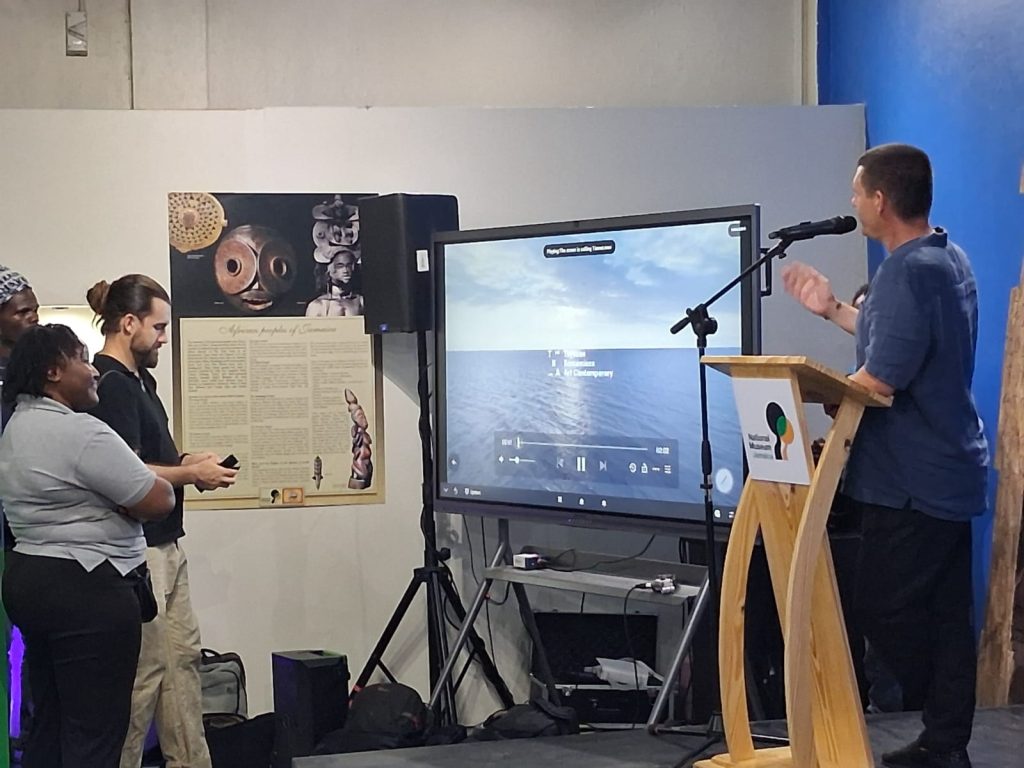
Photo: Contributed
From the Sacred Ocean Alliance to Deep Sea Dialogues
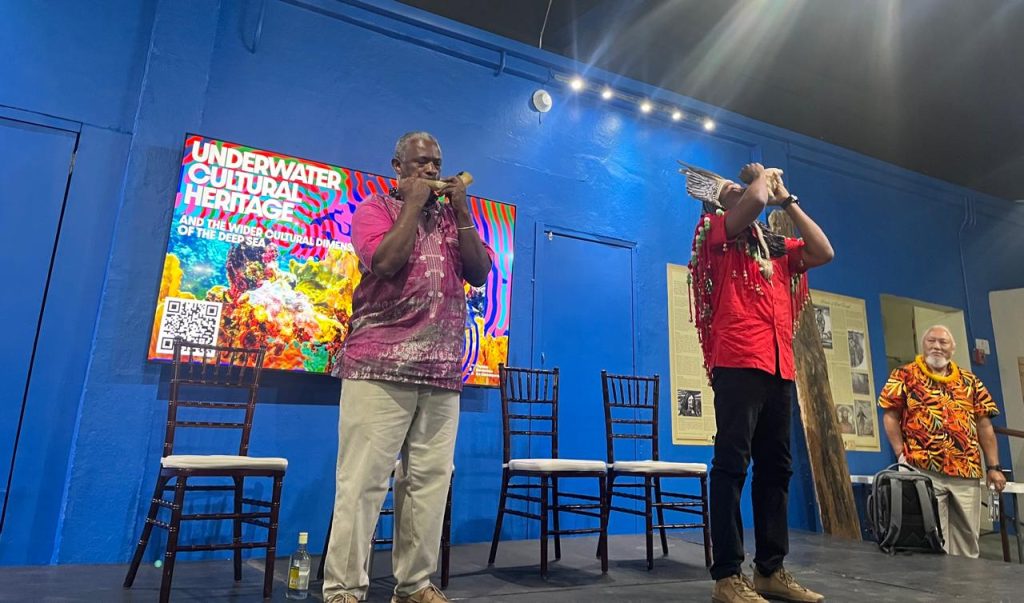
Six days later, on July 25, the conversation moved from Charles Town to the Institute of Jamaica for the second staging of Deep Sea Dialogues. The event brought together experts, observers and civil society organisations to discuss three formal areas of the ISA’s work: science, economics and governance.
The science session examined deep-sea research and scientific knowledge; the economics session considered the financial questions surrounding deep-sea mining; and the governance session examined the ISA and recent developments in ocean governance. Then the conversation widened. The closing reception, “Underwater Cultural Heritage and the Wider Cultural Dimension of the Deep Sea”, shifted attention towards culture and the role of Indigenous and traditional knowledge in understanding the ocean.
That distinction is important because according to UNESCO, Underwater Cultural Heritage includes tangible traces of human existence beneath the water, including sites, wrecks, human remains and objects. The ISA discussions also recognise a wider cultural dimension— including intangible heritage, sacred relationships, cosmologies and knowledge systems associated with the marine environment. For many Indigenous Peoples, those relationships form part of how the ocean itself is understood.
The question, then, is not simply how humanity manages the seabed. It is also whose knowledge informs those decisions.
What changes when culture enters ocean governance?
The formal Deep Sea Dialogues programme centred on science, economics and governance before the reception opened another door: culture. Indigenous knowledge does not sit outside these conversations as decoration. It brings generations of observation, relationship and practice into discussions about marine ecosystems and stewardship.
For the Jamaican Indigenous representatives, this meant bringing cultural knowledge, ceremony, history and lived relationships with the sea into a policy space traditionally dominated by institutional and technical language. It also meant confronting the consequences of exclusion.
At the reception, ISA Secretary-General Leticia Carvalho publicly acknowledged that Jamaica’s Indigenous Peoples had not previously been included.
“I must acknowledge, and I must correct, that the indigenous peoples of Jamaica were not part of the International Seabed Authority. My deep apologies. This is corrected from now onwards. You are much welcome. I truly believe that when more and diversified knowledge is at the table, governance will be stronger, more legitimate, and more enduring.”
Leticia Carvalho, secretary-general – international seabed authority
For the Jamaican delegation, while that acknowledgement is significant, it is also the beginning.
Wakia Yaka: On the people thought to be lost to history
On July 30, when Kasike Kalaan and Gaama Mama G addressed the ISA Assembly, their statement connected Jamaican Indigenous history with the future of the deep ocean. Kasike Kalaan introduced himself as Chief and Behike of the Yukayeke Yamaye Guani Taíno Peoples, and described the Yamaye Guani as the First Peoples of Jamaica and ancestral custodians of the Caribbean. He spoke of the Atlantic seabed as a repository of historical memory, including the resting place of millions lost through the Transatlantic Slave Trade. He also brought the conversation back to living heritage.
The statement argued that culture must inform decisions about the ocean because Indigenous relationships with the sea are lived, spiritual and intergenerational. It also stated the Jamaican Indigenous delegation’s support for calls for a moratorium on deep-sea mining and advocated for Indigenous participation in future seabed governance.
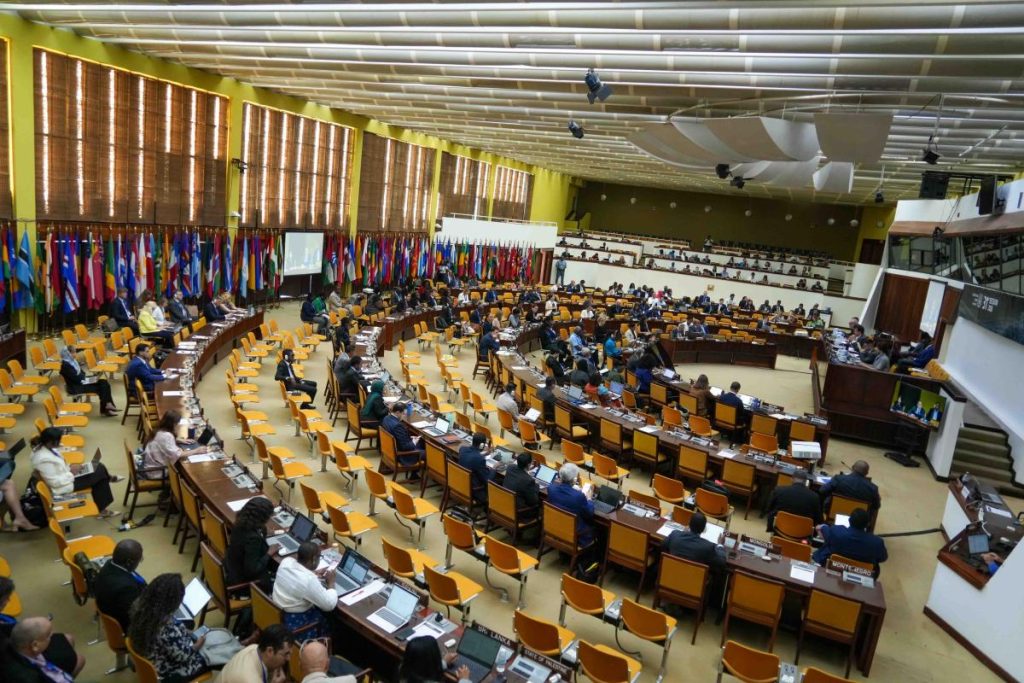
Additionally, it called for implementation of the United Nations Declaration on the Rights of Indigenous Peoples within the ISA and for independent Permanent Observer status. This distinction is important because while participation in one Assembly is historic, permanent participation would create an institutional mechanism through which Jamaican Indigenous Peoples have a seat at the table, and can continue contributing to conversations and decisions affecting the ocean.
Thus, recognition has opened the door, and continued representation will determine whether it stays open.
The ocean remembers
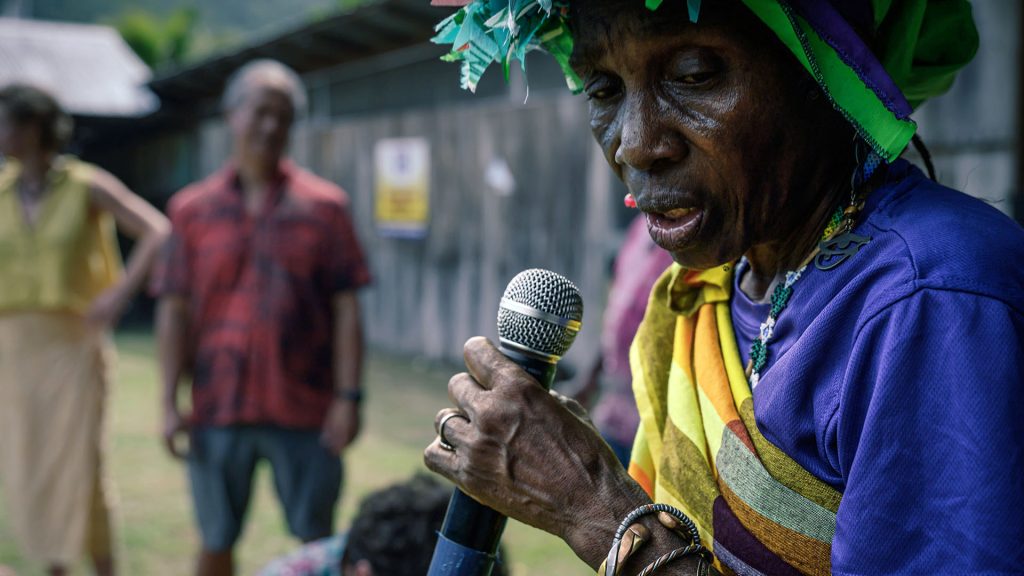
Mama G’s words during the Charles Town wata (water) ceremony, which, in a way, personified the qualities of water, offer another way to understand the significance of what happened in Kingston, and what Indigenous representation in a forum such as this represents.
“Wata is something that carries memories. You can speak your intention into wata. Wata itself is life. Wata flows. Wata is so powerful but looks so gentle…It has no obstacles in its way. It will either go under, go over, or go through.”
gaa mang gloria ‘mama g’ simms – paramount queen of the diaspora maroons
As she invited those gathered to speak their intentions into the water, she continued:
“As we think … we put our imagination, our mind, our intention into the flow of wata today, because this wata is the reason, and the mission and the purpose that brings us all together.”
That speech offers a useful lens for understanding the larger advocacy. The argument is not simply that Indigenous Peoples possess information policymakers need. It is that relationships with land and water produce forms of knowledge, responsibility and stewardship that deserve recognition in the spaces where environmental decisions are made.
This has been the position behind Writes and Kulcha’s reporting on the issue.
What does this mean for Jamaica?
While the July 30 intervention does not resolve the question of Indigenous participation in ocean governance, it gives it a microphone. For Jamaica’s Indigenous Peoples, the next step is formalised institutional recognition that turns invitation into sustained participation. This is exactly why their call for Permanent Observer status matters.
So does the ISA Secretary-General’s acknowledgement that Jamaica’s Indigenous Peoples were previously absent from the Authority.
So does the emergence of culture within a conversation previously structured around science, economics and governance.
And so does the relationship-building that happened through ceremony before anyone entered the Assembly.
These are all part of a larger process, and for Writes and Kulcha, the significance lies in the continuity. Our call has been consistent: the people whose histories, cultures and relationships are rooted in the land of wood and water must have a say in the decisions concerning its future. The work, now, is to ensure their voices remain in the room.
Reporting Note
This article was prepared using information, statements, images and video materials shared with us by Yamaye Guani’s Kasike, Kalaan Nibonrix Kaiman, alongside materials provided by event organisers and publicly released event information, as we were not physically present at the events described.
Writes and Kulcha is the official media partner of the Yamaye Guani Taíno Peoples.
Endnotes
¹ Wakia Yaka — Island Arawakan for “We are here”. Island Arawakan is a language spoken by the Taíno, relative Peoples and their descendants.
² Yamayeka/Yamaye — Jamaica’s First Peoples refer to the island as Yamayeka, or more informally, Yamaye.
³ Guamo — Conch shell blown as a horn by Indigenous Peoples as a means of conveying messages.
⁴ Abeng — A wind instrument made from cow horn, traditionally used by the Maroons as a discreet communication tool.
⁵ Kasike — Chief.
⁶ Yukayeke — Tribe.
⁷ Yamaye Guani — Jamaica Hummingbird.
⁸ Gaa Mang/Gaama — Paramount Queen/Chieftainess. Mama G, an elder in both the Taino and Maroon communities, is the Gaa mang and Spiritual Leader of the Diaspora Maroons.
⁹ Kasike-Rahuto — Chief’s daughter/offspring.
¹⁰ Behike — Primary healer within the Taino community.
¹¹ Kasike-iani— Chieftainness
 WK Admin